
March 2026 marked the 60th anniversary of the closure of the Somerset & Dorset Joint Railway. The line remains one of Britain’s best-loved lost railways, and its legacy lives on through heritage railways and recreational routes – including our own North Dorset Trailway.
Here are a few interesting facts about this remarkable railway.
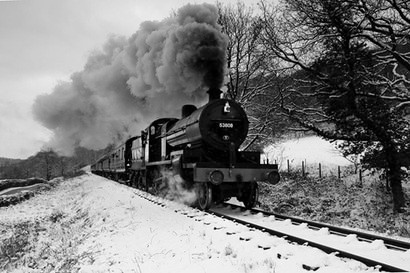
One of the steepest main lines in England
The railway was famous among railway workers for its demanding gradients. Trains had to climb long stretches at 1 in 50, particularly over the Mendip Hills near Masbury Summit. This made it one of the toughest routes for steam locomotives in southern England.
Why was it called “The Slow and Dirty”?
Railway workers jokingly called the line “The Slow and Dirty” because its steam locomotives had to battle steep gradients and long climbs across the hills of Somerset and Dorset. Coal smoke and soot often covered the engines and their crews by the end of a journey.
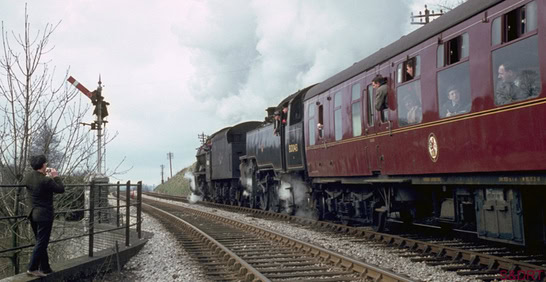
Holiday trains packed with seaside visitors
During the summer, the line carried huge numbers of holidaymakers from the Midlands to the Dorset coast, especially Bournemouth. Long excursion trains were common and sometimes required two steam locomotives – known as double-heading – to pull them up the steep hills.


Powerful engines built for a demanding railway
Two batches of SDJR 2-8-0 mineral engines were built for the railway. The first six, designed by Henry Fowler, were constructed at Derby from 1913 and delivered between March and December 1914 as Nos 80–85. Each cost £3,500.
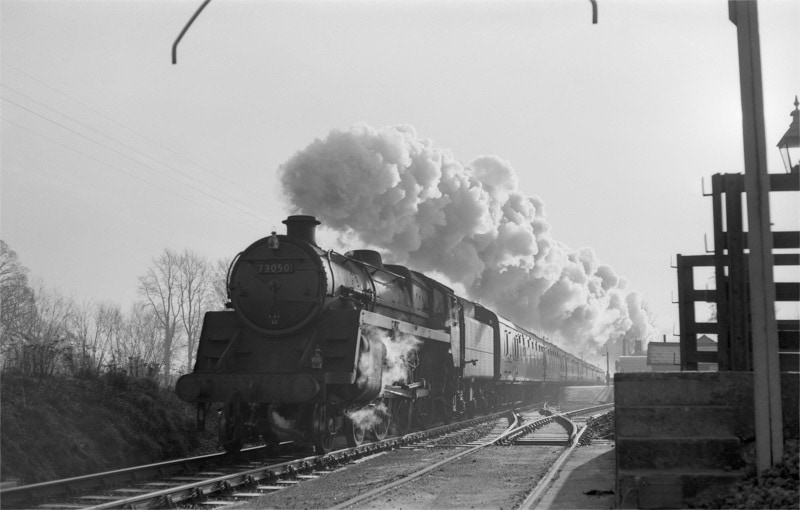
They were the first Somerset & Dorset locomotives to have outside cylinders and Walschaerts valve gear. To clear platform edges, the cylinders were inclined at 1 in 12. At nearly 60 feet long, the engines were too large for the railway’s turntables, so tender cabs and tablet-exchange equipment were fitted.
Among the most powerful engines of their time, they were designed to cope with the steep gradients and tight curves of the Bath Extension. They featured three brake cylinders and six steam-operated sandboxes.
Early modifications included flattening the dome, removing the chimney lip and cab ventilators and simplifying equipment such as the superheater dampers. Other changes included shorter buffers, gravity sanding, three-link couplings and mechanical lubricators. The unpopular tender cabs were removed by 1924.
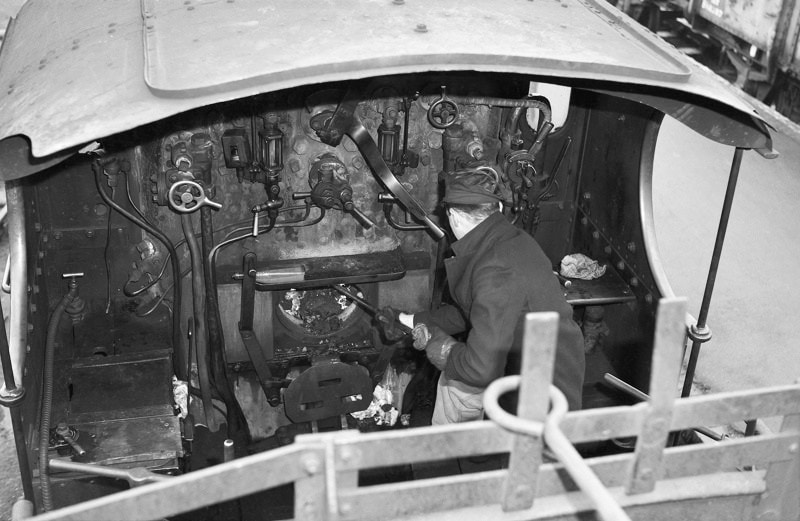
A second batch, Nos. 86–90, followed in 1925. Built by Robert Stephenson & Co. Ltd at a cost of £6,570 each, these engines had larger boilers and were slightly shorter but two tons heavier, improving their adhesion. They used a shorter Fowler standard tender instead of the earlier Deeley type and were driven from the left.
A controversial closure
The line closed in 1966 as part of the Beeching cuts. Many people protested against the decision, believing that the railway still had an important role to play.
Decades later, parts of the route have been revived in a different way through heritage railways and recreational trails, of which the North Dorset Trailway is an important part. Several surviving stations have been restored as homes, cafés or heritage sites, helping to preserve the railway’s memory.
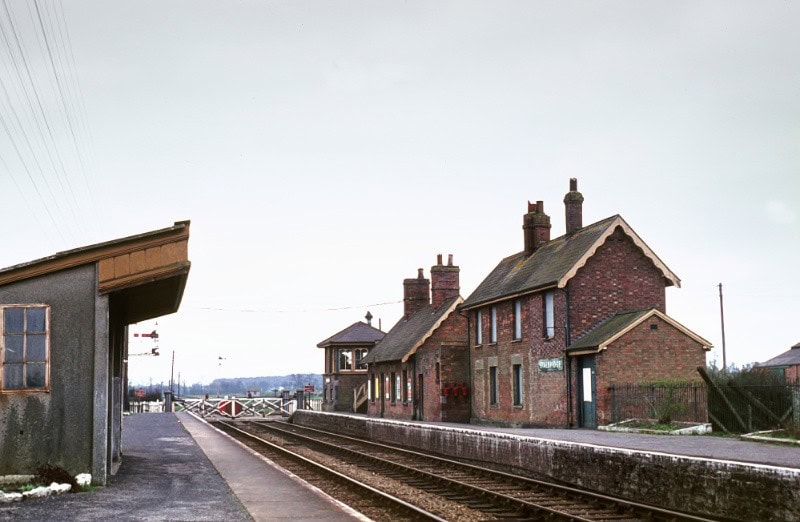 Stalbridge Station with barriers closed. 1966. Photograph courtesy of the S&DR Trust.
A living legacy
The story of the Somerset & Dorset Joint Railway is not simply something to read about – it can still be experienced. Today, people can walk, cycle and ride along parts of its former trackbed on the North Dorset Trailway, enjoying a traffic-free route through the countryside while following in the footsteps of this remarkable railway.
And finally, from then to now – what a journey it has been
Once, the sound of steam and passing trains echoed along this route. Today, footsteps, bicycle wheels, hoofbeats and birdsong bring it to life as the beautiful Trailway we know and enjoy.
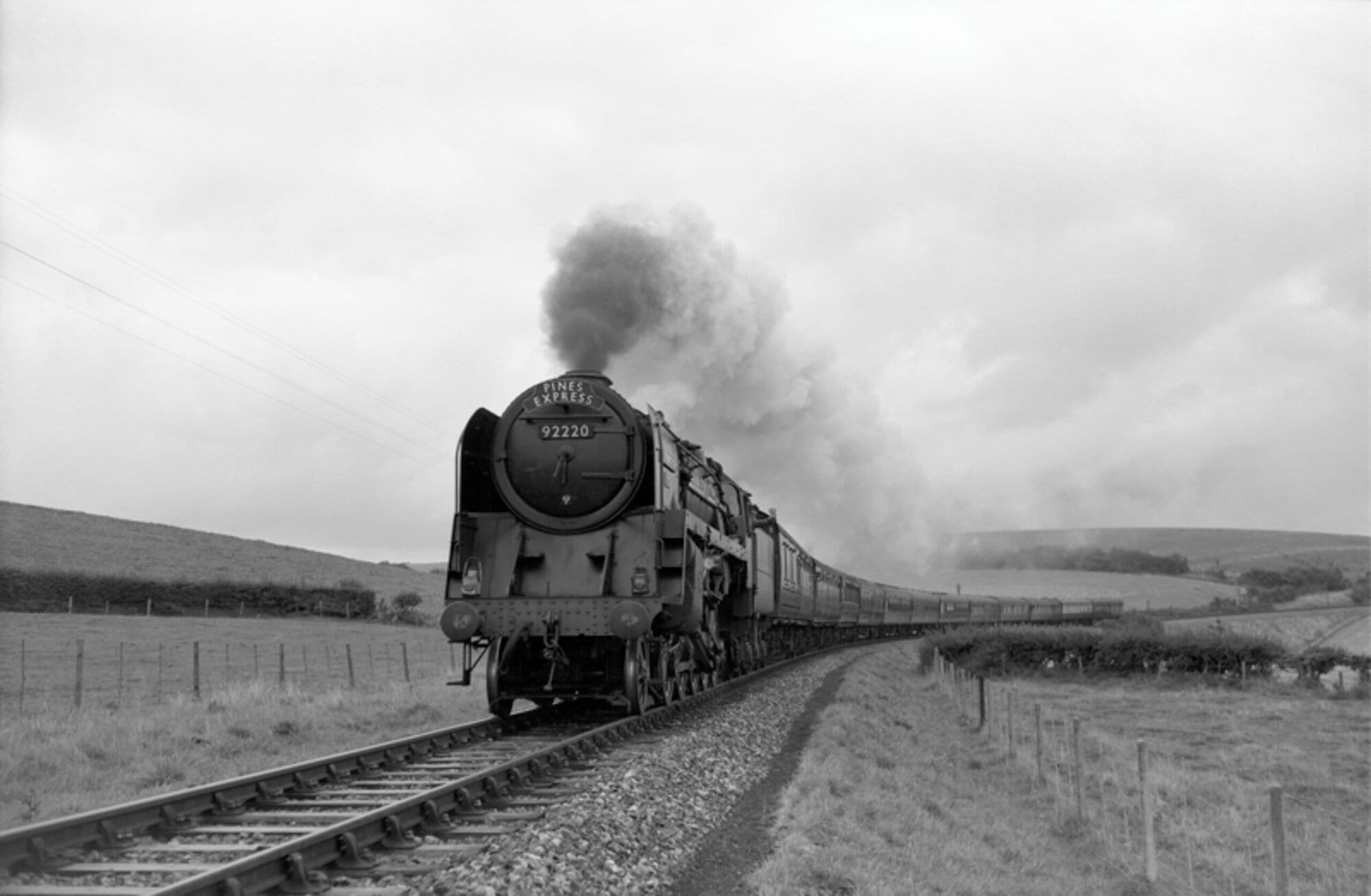 Then: The Pines Express passing Manor Farm in the early 1960s. Photograph courtesy of the S&DR Trust.

Featured image: Shillingstone station. Photograph courtesy of the S&DR Trust.